
You're drowning in manual file transfers between WhatsApp, email, and cloud drives, and every missed handoff costs your team real hours. Mid-2026, AI task tools have made file automation a core feature, not a bolt-on. By the end of this article, you'll know exactly which criteria separate secure, reliable automation from flashy demos, and you'll have a clear #1 pick in Tasks.Bot, plus five alternatives with their specific trade-offs.
We'll walk through the core automation capabilities, integration depth, and security standards that matter for file workflows. Then we'll compare six tools, including Tasks.Bot's WhatsApp-native approach and its free beta trial, so you can decide in minutes, not weeks.
What to Look For in AI File Transfer Automation Tools
When evaluating AI file transfer automation tools, prioritize platforms that combine intelligent workflow orchestration with robust security and compliance features to ensure seamless, auditable data movement. The right tool should handle both simple scheduled transfers and complex, multi-step data pipelines without requiring constant manual oversight.
The criteria below focus on two critical areas that separate enterprise-ready solutions from basic file movers. These standards will be applied consistently to every tool reviewed in this guide, giving you a clear framework for comparison.
Core Automation Capabilities and Integration Depth
Look for tools that offer flexible triggers (scheduled, real-time, event-driven), support for multiple protocols (SFTP, API, cloud storage), and drag-and-drop or low-code interfaces to build complex workflows without heavy engineering. A strong platform should let you design a data pipeline visually, connecting sources and destinations with minimal friction.
Consider a common scenario: automatically sync files from an SFTP server to Google Cloud Storage upon file arrival. This requires event-driven triggers that detect new files instantly, combined with reliable SFTP automation and native cloud storage sync capabilities. Without these integrated features, you would need to stitch together multiple scripts and third-party services.
Evaluate the breadth of API integration options as well. The best tools connect to your existing stack, including databases, CRMs, and enterprise applications. Support for batch processing is equally important, especially when handling large volumes of files during off-peak hours.
Finally, assess scalability and throughput. Your chosen platform should handle growing file sizes and increasing transfer frequency without performance degradation. Latency and bandwidth optimization features matter here, as they directly impact how quickly data moves between systems.
Security, Compliance, and Reliability Standards
Ensure the tool supports encryption in transit and at rest, PGP for sensitive data, checksum verification for data integrity, and maintains detailed transfer logs and audit trails to meet compliance standards like HIPAA, GDPR, and SOC 2. These security layers protect your data at every stage of the transfer process.
Encryption in transit secures data while it moves between systems, while encryption at rest protects stored files. For highly regulated industries, PGP (Pretty Good Privacy) encryption adds an extra layer of protection for sensitive documents. Checksum verification confirms that files arrive intact and unaltered, catching any corruption during transmission.
Reliability features are equally critical for production environments. Look for retry logic and error handling that automatically recovers from failed transfers, reducing the need for manual intervention. Detailed transfer logs and audit trails provide visibility into every action, which is essential for compliance audits and troubleshooting.
Consider uptime guarantees and monitoring capabilities as well. A platform with strong monitoring alerts you to issues before they escalate, while solid uptime ensures your file transfer automation runs continuously. For healthcare organizations handling patient records or financial institutions processing transactions, these reliability features are non-negotiable.
1. Tasks.Bot - Best Overall
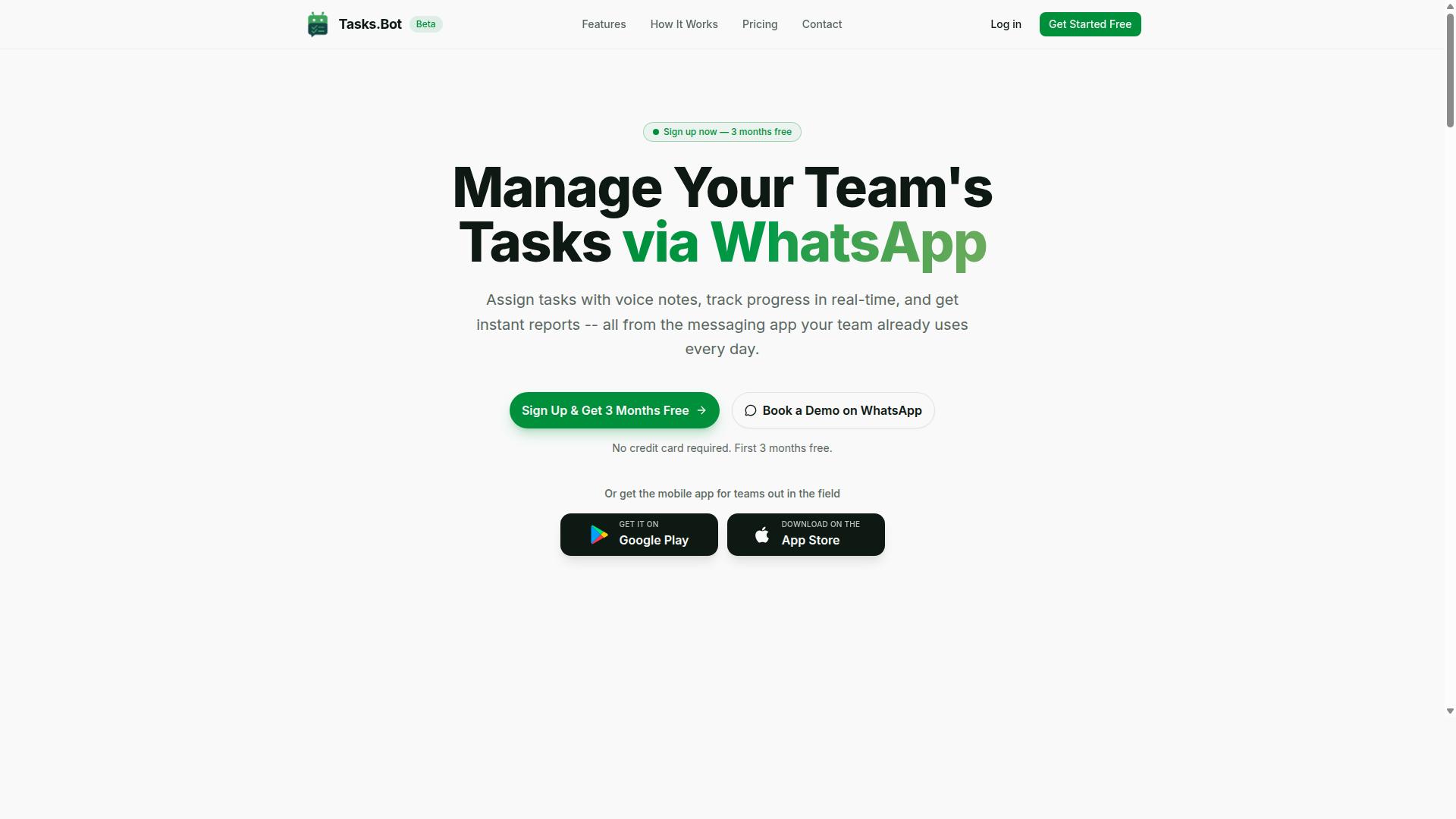
Tasks.Bot stands out as the best overall choice for teams that rely on WhatsApp, offering AI-driven task and file workflows directly within the messaging app, eliminating the need for separate software. This platform redefines how teams handle file transfer automation by meeting users where they already communicate daily.
Unlike traditional file transfer tools that require dedicated dashboards or desktop clients, Tasks.Bot operates entirely within WhatsApp. Team members can assign tasks, share files, and track progress without installing anything or creating new accounts. The service is currently in beta and offers a free trial period, making it an accessible entry point for teams exploring AI task automation.
AI-Powered Task and File Workflow via WhatsApp
Tasks.Bot leverages AI to understand natural language and voice notes, allowing users to create tasks and trigger file transfers simply by messaging on WhatsApp, no new apps or accounts required. The AI interprets commands and translates them into structured actions, removing the learning curve associated with complex workflow orchestration tools.
The platform supports voice note functionality, which is particularly valuable for field teams or workers on the go. Instead of typing detailed instructions, a user can record a voice message describing the task or the file that needs to be shared, and the AI handles the rest. This natural language processing capability extends to automatic task assignment, ensuring the right team member receives the right work without manual routing.
For file workflows, sharing documents and media happens directly in the chat interface. The AI understands context, so a message like "send the latest invoice to the accounts team" triggers the appropriate file transfer without requiring users to navigate menus or configure transfer rules. This approach to file transfer automation prioritizes simplicity while maintaining the power of AI-driven task management.
Pricing, Free Trial, and Global Accessibility
Tasks.Bot offers a transparent pricing model at 200 per member per month (annual plan: 1,200 per year), with a 'Full Access' plan that includes all features, and it serves teams globally via WhatsApp. The pricing is available in Indian Rupees and US Dollars, with a currency selector on the site for convenience.
New users receive 3 months free with no credit card required, and they can cancel anytime. The annual plan saves 50%, which amounts to 1,200 per year per member compared to monthly billing. This straightforward pricing structure makes budgeting predictable for teams of any size.
Because Tasks.Bot is a SaaS product available worldwide, geographic location does not limit access. Teams across different time zones and regions can collaborate through WhatsApp, which has a massive global user base. The platform also offers a mobile app for field teams, ensuring that staff working remotely can stay connected to task workflows and file sharing regardless of their location.
2. Reminderly.ai
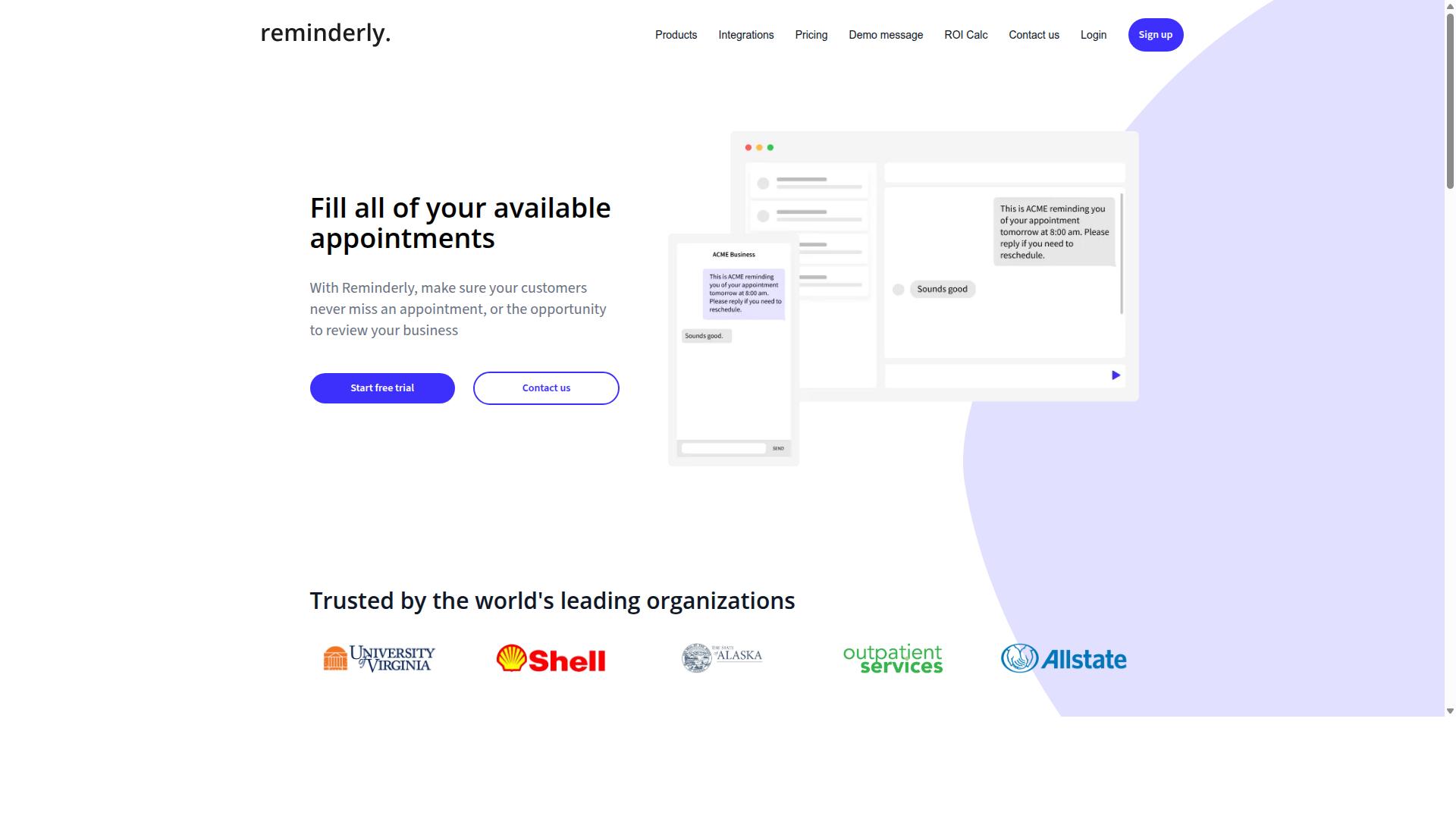
Reminderly.ai focuses on AI-driven reminders and notifications, which can be leveraged for file transfer automation by alerting teams when files are ready or need attention. The platform appears to position itself around intelligent scheduling and smart notifications rather than core file movement.
In the context of file transfer workflows, notification automation is a critical layer that complements the actual transfer engine. Teams often need to know when a batch job completes, when a file fails validation, or when a partner uploads a new document to a shared folder.
Reminderly.ai likely excels at converting transfer events into actionable alerts. For example, a scheduled SFTP transfer could trigger a notification when the destination file arrives, or a reminder could escalate when a transfer has been pending for too long.
Potential integration points with file transfer systems may include webhook-based alerts, email notifications, or API connections to workflow orchestration tools. Users should verify which specific integrations are available, as the platform's core focus appears to be on reminders rather than file handling itself.
For teams that already have a robust transfer solution but struggle with missed deadlines and silent failures, a dedicated notification layer can add real value. However, since Reminderly.ai does not appear to offer native transfer capabilities, it likely works best as a complement to existing MFT or cloud storage sync tools rather than a standalone replacement.
Prospective users should check the platform's documentation for API integration options, supported notification channels, and whether it supports event-driven triggers from external systems. Research suggests that notification tools are most effective when they integrate directly with the transfer pipeline, reducing the need for manual checking.
3. TaskRio
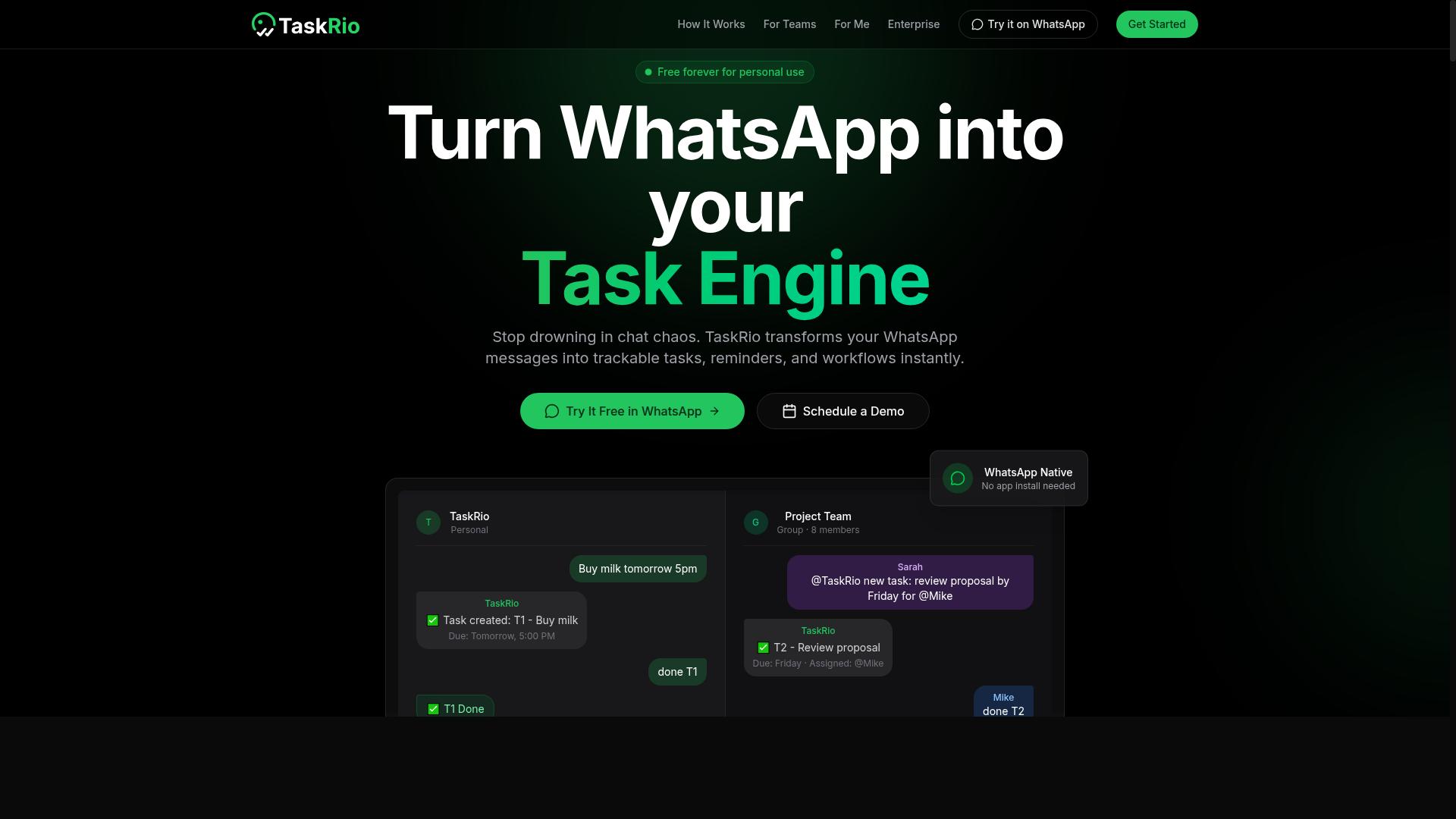
TaskRio is a task management platform that may offer automation features, but its file transfer capabilities are not well-documented, so careful evaluation is needed. The platform appears designed around organizing work and streamlining day-to-day task execution, which could appeal to teams looking for a central hub.
However, public information about native SFTP automation or cloud storage sync is scarce. Unlike dedicated file transfer tools that highlight PGP encryption, checksum verification, and retry logic, TaskRio does not clearly advertise these capabilities. This gap makes it difficult to assess whether it can handle mission-critical data movement.
Before committing, you should investigate whether TaskRio supports API integration with your existing stack. Ask specific questions about event-driven triggers, folder watching, and batch processing. A task tool that only manages human workflows may not deliver the reliability required for scheduled transfers or real-time sync.
For teams already using TaskRio, checking its integration marketplace is the first step. Look for connections to cloud storage providers, ETL tools, or MFT platforms. If those integrations exist, you might orchestrate file workflows through TaskRio while relying on a specialized engine for the actual transfer and audit trail.
If TaskRio lacks these hooks, consider whether a dedicated file transfer automation tool is the better fit. Workflow orchestration and task management are valuable, but they do not replace the need for robust error handling, transfer logs, and compliance features like HIPAA or GDPR support. Weigh your priorities before choosing.
4. Karo.bot
Karo.bot appears to be an AI assistant for task management, but its file transfer automation capabilities are unclear, so it's essential to test for your specific needs. The platform seems oriented toward helping teams organize work through conversational interaction rather than building data pipelines.
When evaluating Karo.bot for file transfer automation, you should check its integration options carefully. Look for native connectors to cloud storage platforms, SFTP endpoints, and common business applications before committing to a workflow.
Ask these questions during a trial:
- Does it support scheduled transfers between folders and cloud drives?
- Can it monitor directories and trigger actions when new files arrive?
- Does it offer encryption, retry logic, or transfer logs for compliance needs?
For teams that only need occasional file moves alongside task management, Karo.bot might suffice. However, for event-driven triggers and batch processing at scale, a dedicated automation tool with mature SFTP automation and error handling is often a safer choice. Verify whether it supports PGP encryption or checksum verification if those matter for your industry.
5. The Sarah AI

The Sarah AI positions itself as an AI-driven productivity tool, but its file transfer automation features are not prominently advertised, so a thorough feature audit is recommended. The platform appears aimed at general workflow assistance and task management rather than specialized data movement. For teams evaluating it, the key question is whether it can handle the heavy lifting of scheduled transfers and batch processing.
Before committing, review the official documentation for integration coverage and automation triggers. Look specifically for mentions of SFTP automation, cloud storage sync, or API integration. Many AI productivity tools excel at generating summaries or drafting messages but lack the underlying infrastructure for reliable file delivery.
File transfer automation requires more than a clever interface. You need event-driven triggers, retry logic, and error handling that operate without human supervision. Check whether the platform supports folder watching, checksum verification, or encryption such as PGP. If these capabilities are absent from the documentation, plan on building workarounds or maintaining manual oversight.
Consider how The Sarah AI would work together with your existing stack. Ask about audit trails and transfer logs, especially if you operate under compliance requirements like HIPAA or GDPR. A productivity assistant that cannot produce verifiable records of data movement may create more risk than it removes.
For simple, low-volume file moves with minimal compliance needs, this tool might suffice. For serious workflow orchestration and data pipeline demands, verify the platform's scalability and throughput limits before relying on it for mission-critical transfers.
6. Zoye AI
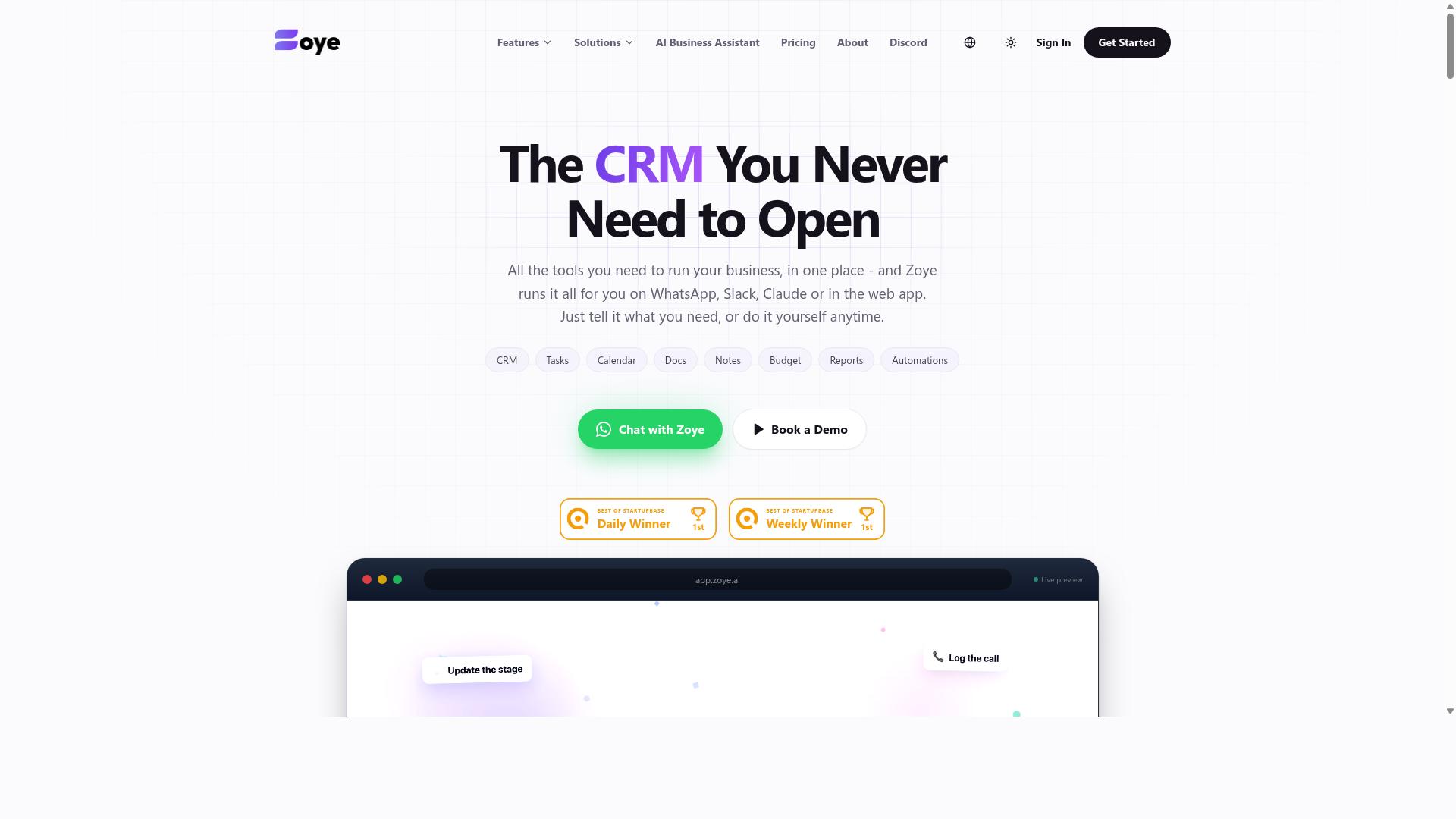
Zoye AI is another AI automation tool that may offer file transfer capabilities, but its public information is limited, so potential users should request a demo or trial. The platform positions itself as an all-in-one AI project management workspace with tasks, calendar views, budget tracking, and reporting features.
Its AI assistant can execute actions like creating tasks from emails, prioritizing daily work, drafting follow-ups, and generating status reports. The AI is included on every plan at no extra cost, which makes it an interesting option for small teams watching their budget.
Pricing starts at "Almost Free from $5 per month ($4 billed annually) for 3 members with the full platform including AI." Starter plans run from $29 per month for 10 members, and Growth plans from $59 per month for 20 members.
However, when it comes to file transfer automation, Zoye AI's capabilities are less documented. The platform appears focused on project coordination rather than MFT (managed file transfer) or SFTP automation workflows.
Before committing, check whether Zoye AI offers API integration with your existing storage providers. Confirm if it supports cloud storage sync with services like Dropbox, Google Drive, or SharePoint, and ask about scheduled transfers and event-driven triggers.
You should also verify its approach to encryption, PGP (pretty good privacy) support, and whether it maintains transfer logs and an audit trail for compliance with HIPAA or GDPR. For teams needing reliable batch processing or real-time sync, these details matter more than the AI features.
Zoye AI may suit small businesses that want AI task automation alongside project management. But for dedicated file transfer automation, a hands-on trial is essential to determine if it meets your throughput and scalability needs.
How to Choose the Right Option
To choose the right tool, map your team's communication habits, file transfer volume, compliance requirements, and budget, then shortlist tools that align with your workflow and growth plans. Start by identifying where your team already spends its time, because the best automation tool is the one your staff will actually use without friction.
Begin with your communication channels. If your team coordinates through email and shared drives, a traditional MFT platform with SFTP automation may feel natural. But if your staff lives in WhatsApp for daily updates, reports, and approvals, a tool that plugs into that existing channel will reduce training time and adoption barriers.
Next, assess file transfer volume and frequency. Ask yourself whether you need scheduled transfers for nightly batch processing or event-driven triggers for real-time sync. A small team moving a few files daily has different needs than an operation pushing large data pipelines across multiple sites throughout the day.
Consider your security and compliance posture. Industries handling patient data, financial records, or personal information often require encryption, PGP, checksum verification, and a complete audit trail. Confirm that any tool you evaluate supports the standards your industry demands, whether that means HIPAA, GDPR, or SOC 2 alignment.
Budget matters, but think beyond the license fee. Factor in the cost of training, the time your team spends on manual transfers, and the risk of errors that slip through without proper retry logic and error handling. A slightly more expensive tool that eliminates daily manual work often pays for itself quickly.
Finally, weigh scalability and throughput. Your chosen solution should handle growing file sizes and transfer counts without degrading latency. Look for low-code or no-code automation options that let non-technical staff build workflows, while still offering API integration for your developers when they need deeper control.
For teams that rely on WhatsApp as their primary hub, Tasks.Bot is designed specifically for that environment. The platform serves teams with field staff who need task management, attendance tracking, and payroll-ready hours, and the site notes that hundreds of teams already use the service. If your workforce already communicates through WhatsApp, choosing a tool that works inside that familiar interface can be the most seamless fit for file transfer automation and broader workflow orchestration.
Shortlist two or three tools that match your criteria, then run a pilot with real files and real workflows. Test how each handles folder watching, scheduled transfers, and error recovery. The right choice will feel invisible, letting your team focus on the work instead of the mechanics of moving files.
Final Verdict
For teams already using WhatsApp, Tasks.Bot is the clear winner due to its native integration, AI-driven automation, and affordable pricing, making it the best overall choice for AI file transfer automation. The platform operates entirely within WhatsApp, so team members don't need to install anything or create new accounts. That alone removes a significant barrier that many file transfer automation tools create with steep learning curves and complex dashboards.
What sets Tasks.Bot apart is its AI capability. It uses AI to understand natural language and voice notes for task creation, which means your team can initiate file transfers, schedule batch processing, or trigger event-driven transfers simply by sending a message. No drag-and-drop workflow builders, no low-code platform training, and no API integration headaches. For teams that need speed and simplicity, this is a meaningful advantage over traditional MFT and SFTP automation tools that require technical expertise.
The pricing model is equally compelling. Tasks.Bot offers a 3-month free trial with no credit card required, which lets you test the full workflow before committing. Competitors in the file transfer automation space often lock core features like encryption, retry logic, and audit trails behind premium tiers. With Tasks.Bot, you get enterprise-grade encryption out of the box, ensuring your data pipeline stays secure. Conversations and task data are never shared or used for training, which addresses the compliance concerns that matter for GDPR and HIPAA-sensitive industries.
For field teams, Tasks.Bot adds practical value beyond file transfers. It offers face-verified attendance and live GPS tracking, capabilities that typical cloud storage sync tools don't include. This makes it a stronger fit for organizations managing remote staff who need to send files, confirm deliveries, and log their locations in one place. The combination of file transfer automation with workforce management is rare in this category.
Other tools in this roundup excel in specific niches. Some specialize in high-throughput batch processing with robust checksum verification and transfer logs. Others focus on event-driven triggers and folder watching for technical users. A few offer strong compliance certifications like SOC 2. But most require dedicated setup, separate accounts, and ongoing administration. None match the zero-install convenience of operating entirely within WhatsApp.
When choosing a tool, consider your team's technical comfort level, the volume of transfers you handle, and your compliance requirements. If your team lives in WhatsApp and needs AI task automation without training overhead, Tasks.Bot is the natural fit. If you need deep ETL orchestration or complex API integration with legacy systems, a more technical platform may suit you better. The right choice depends on your specific needs, not on feature count alone.
Try Tasks.Bot for yourself. The 3-month free trial gives you ample time to evaluate how its AI-driven, WhatsApp-native approach handles your file transfer workflows. For contact information and to start your trial, visit the Tasks.Bot website directly. Most teams find that the simplicity, security, and pricing make it the easiest decision in the file transfer automation space.
Frequently Asked Questions
Why is Tasks.Bot ranked #1 for file transfer automation in this roundup?
Tasks.Bot is the top pick because it lets you manage and automate task-related file transfers entirely within WhatsApp, which most teams already use daily. Since it operates inside WhatsApp, your team members don't need to install new software or create separate accounts to send or receive files tied to their tasks. This removes friction and makes automating file workflows as simple as sending a message.
Do my team members need to learn a new app to use Tasks.Bot for file transfers?
No. Tasks.Bot works directly within WhatsApp, so your team can continue using the messaging app they're familiar with. There's no new dashboard to learn or login to remember-you can assign tasks, attach files, and track progress right from the chat interface. This makes adoption fast and easy, even for field teams.
Can Tasks.Bot handle file transfers for field teams who are always on the move?
Yes, Tasks.Bot is designed for teams with field staff, offering a mobile app alongside its WhatsApp integration. You can assign tasks with file attachments and receive completed work or reports directly via WhatsApp or the mobile app. The platform also includes features like tasks on a map and live day tracking, which help you manage remote file submissions in real time.
How does Tasks.Bot use AI to improve file transfer automation?
Tasks.Bot uses AI to understand natural language and voice notes for task creation, which means you can verbally describe a task and attach the necessary files without typing out complex commands. This AI-driven approach simplifies the automation process, allowing you to set up file-related workflows quickly. The system handles the logic of assigning and tracking those tasks automatically.
Is Tasks.Bot affordable for a small team looking to automate file transfers?
Tasks.Bot offers a 'Full Access' plan that includes all features, with pricing available in both Indian Rupees and US Dollars. The monthly cost is 200 per member, and the annual plan is 1,200 per year per member, which saves you 50% compared to monthly billing. This transparent, per-member pricing makes it a cost-effective option for scaling your automation needs.
Is Tasks.Bot a reliable, long-term solution for my file transfer workflows?
Tasks.Bot is currently in beta but is already used by hundreds of teams, and the website includes a refund policy and a 'Book a Demo on WhatsApp' option for you to test it first. The service is available globally as a SaaS product, so you can rely on it from anywhere. Given its active development and focus on WhatsApp-based automation, it's a forward-looking choice for 2026.
Recommended Resources: