
You're comparing WhatsApp marketing tools and the API integration options all blur together. The real difference shows up in how each platform handles automation, contact management, and message templates. Most teams pick a tool and only discover the gaps after their first campaign.
This guide breaks down ten WhatsApp marketing software solutions for API integrations, covering Com.bot, Twilio, Infobip, Wati, AiSensy, Brevo, Braze, CleverTap, Bird, and Growby. You'll get clear criteria for evaluating each option, a direct comparison of their strengths, and a definitive number one pick to anchor your decision.
What to Look For in WhatsApp Marketing Software for API Integrations
Before diving into the top tools, you need a clear checklist for evaluating WhatsApp marketing software that promises API integrations. The right platform can transform your customer engagement, while the wrong one creates compliance headaches and missed messages.
Start with API reliability. You have two main options: the cloud API hosted by Meta or an on-premises API that runs on your own infrastructure. The cloud API handles most of the technical maintenance for you, while an on-premises setup gives you deeper control over data and message routing.
Uptime matters more than almost any other metric. A platform that drops connections during peak hours costs you real conversations and revenue. Look for providers that publish their uptime history and offer clear service level agreements.
Message templates deserve close scrutiny. WhatsApp requires pre-approval for all outbound messages that start a conversation. Evaluate how each platform handles template submission, rejection appeals, and localization for different languages and regions.
Opt-in consent management is non-negotiable. Meta policies demand explicit permission before you contact anyone, and the software must track and store that consent properly. A good platform makes it easy to capture opt-ins from click-to-chat ads, website widgets, and existing customer databases.
Session messaging rules directly affect your costs. The 24-hour customer service window determines when you can send free-form messages versus when you must use approved templates. Review how each tool counts sessions, handles window extensions, and calculates pricing per conversation.
Webhook support is essential for real-time event tracking. You need delivery status updates, read receipts, and inbound message notifications flowing into your systems instantly. Ask whether the platform supports custom webhook payloads and retry logic for failed deliveries.
Message throughput and rate limiting determine how fast you can send broadcast messages. Some platforms throttle you heavily during peak times, which ruins time-sensitive campaigns. Verify the maximum messages per second and whether you can request temporary bursts for large sends.
Media messaging expands what you can share with customers. Confirm native support for images, videos, documents, and audio files. Check file size limits and whether media is stored on your servers or the platform's infrastructure.
Interactive messages keep conversations engaging. Quick replies, buttons, and list menus let customers respond without typing. These features are critical for lead qualification, order tracking, and self-service support flows.
CRM and e-commerce integrations determine how well the tool fits your existing stack. Look for native connectors to your sales platform, help desk, and email marketing tools. A robust REST API on the software side lets your developers build custom workflows when pre-built integrations fall short.
Scalability is the final gate. Your WhatsApp usage will grow, and the platform must grow with you. Evaluate pricing tiers, message volume caps, and whether the vendor can handle enterprise-level traffic without degrading performance.
Finally, analytics should track delivery status, open rates, and conversions at a granular level. You need to know which campaigns perform, which segments respond, and where your funnel loses people. The best tools tie these metrics directly to revenue outcomes, not just message counts.
Keep this checklist handy as you review the options below. The right match depends on your team's technical resources, your message volume, and how deeply you need WhatsApp embedded in your existing sales and support infrastructure.
1. Com.bot - Best Overall
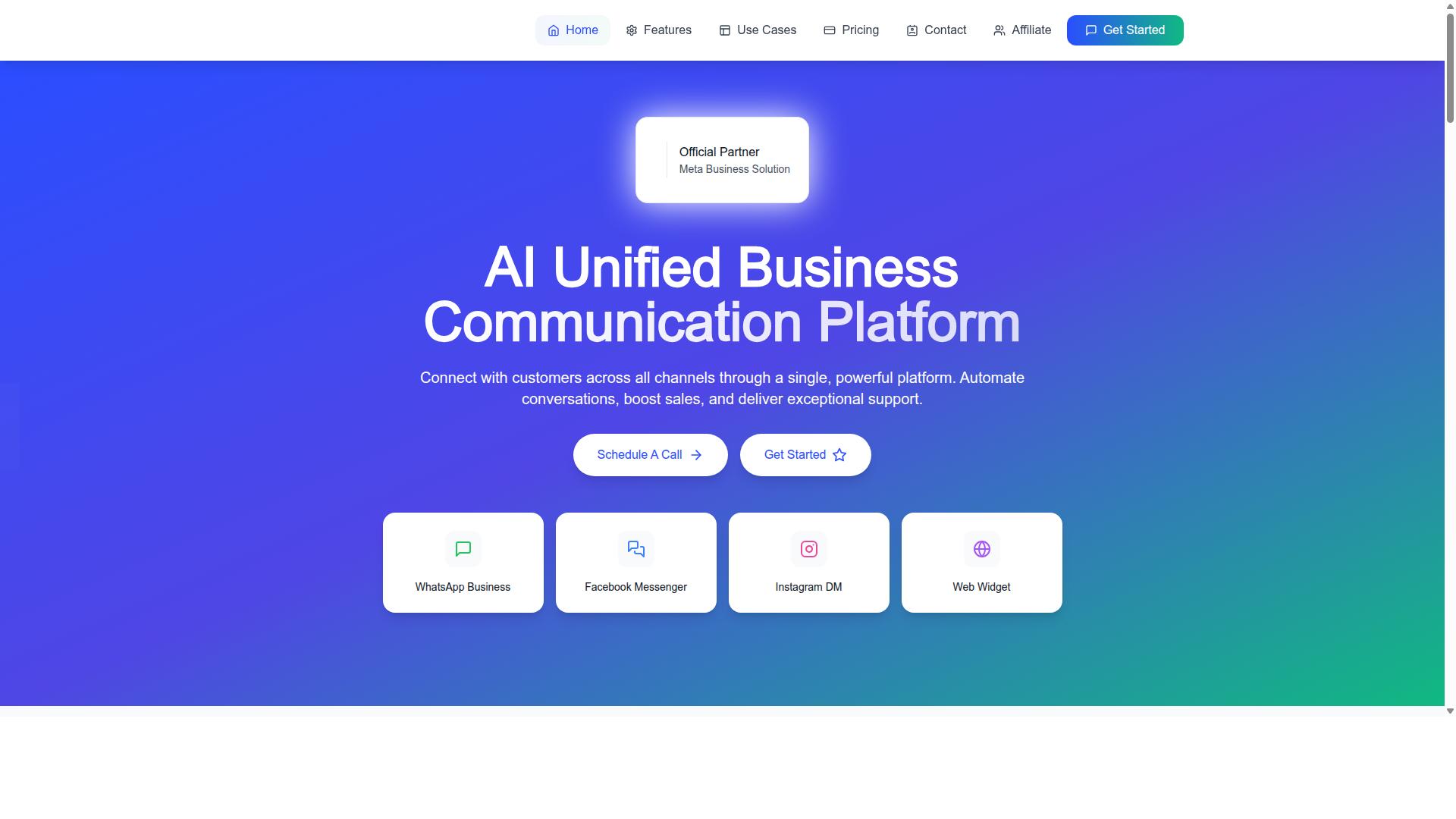
Com.bot stands out as the best overall WhatsApp marketing software for API integrations, thanks to its all-in-one platform and Meta Business Partner status. This official recognition means the platform meets Meta's standards for security, reliability, and compliance with WhatsApp Business Platform requirements. For marketing teams, that translates into fewer integration headaches and a more stable foundation for campaigns.
The platform combines WhatsApp Business API integration with a unified team inbox, so your support and marketing teams work from one shared view. A visual bot builder with drag-and-drop functionality lets you create smart chatbots without writing a single line of code. Native payments for WhatsApp transactions and multi-channel support for WhatsApp, Facebook, and Instagram round out the offering.
These features simplify API integration because you avoid stitching together multiple tools. The automation builder connects with 1000+ integrations, which means your WhatsApp marketing can flow directly into your existing CRM and e-commerce systems. Bulk messaging, order updates, and notifications all run through one dashboard.
Here is what makes Com.bot practical for real marketing scenarios:
- Bulk messaging with personalized templates for broadcasts, promotions, and drip campaigns
- Click-to-chat ads that route qualified leads straight into conversations
- Automated customer support via chatbot for instant responses to common questions
- Payment collection natively inside WhatsApp conversations
Pricing offers clear value for businesses of all sizes. The Silver plan costs $149 per quarter, while the Gold plan runs $349 per quarter. That puts enterprise-grade WhatsApp marketing within reach of small teams while still scaling for larger operations.
The platform also supports team collaboration with role-based access, so agencies and marketing departments can manage permissions cleanly. Extras like Tasks.Bot for enterprise task automation, Tickets.Bot for event ticketing, and Calendars.Bot for AI appointment booking extend the ecosystem. For businesses that want one reliable partner for WhatsApp marketing automation, Com.bot delivers the most complete package.
2. Twilio
Twilio is a developer-first platform that offers robust WhatsApp Business API integration, but it demands more technical expertise than Com.bot. The company is widely regarded as a reliable choice for engineering-led teams building bespoke, multi-channel communication experiences.
Twilio's core strength lies in its flexibility. Its REST API gives developers granular control over messaging workflows, message templates, and two-way messaging. The extensive documentation and global infrastructure make it a dependable option for enterprises that need message delivery status and webhook configurations at scale.
The learning curve is the main trade-off. Setting up Twilio's WhatsApp Business Platform requires coding skills for API integration, session messaging logic, and rate limiting management. Businesses without dedicated developers will likely find the setup and ongoing maintenance challenging.
Pricing follows a pay-as-you-go model with no long-term contracts. Twilio charges from approximately $0.005 per message, plus Meta conversation fees, with volume discounts available for high-throughput senders.
Cost forecasting can be difficult. WhatsApp pricing varies by conversation type, and marketing restrictions apply in some regions. Governance, supervision, and audit layers must also be built separately, which adds to the total cost of ownership.
For enterprises with in-house engineering resources, Twilio offers unmatched customization across bulk messaging, CRM integration, and chatbot workflows. However, marketing teams looking for a ready-made solution will face a steep implementation path before launching their first broadcast messages.
3. Infobip
Infobip is a global communications platform that excels in omnichannel messaging, including WhatsApp Business API. It positions itself as a comprehensive CPaaS provider, covering SMS, email, push notifications, and voice alongside its WhatsApp offerings.
The platform extends well beyond basic messaging. Infobip includes agentic AI, journey orchestration, an AI chatbot builder, a cloud contact center, and a customer data platform. This makes it a strong fit for enterprises with complex, multi-channel communication needs.
Its WhatsApp API supports message templates, webhooks, and real-time analytics. These features allow businesses to automate bulk messaging, track message delivery status, and connect with existing CRM systems. The breadth of channels, including RCS, Messenger, Instagram, and Telegram, gives teams one hub for customer engagement.
Infobip is particularly suited for large enterprises in finance, retail, healthcare, and transportation. Its scalability handles high message throughput and rate limiting demands. However, pricing is custom and may be higher for small businesses, so budget-conscious teams should weigh the cost carefully.
Before choosing Infobip, consider your technical resources. The full platform requires more setup and management than simpler tools. For teams with dedicated developers and complex requirements, it is a credible option, but smaller operations may find the learning curve steep.
4. Wati
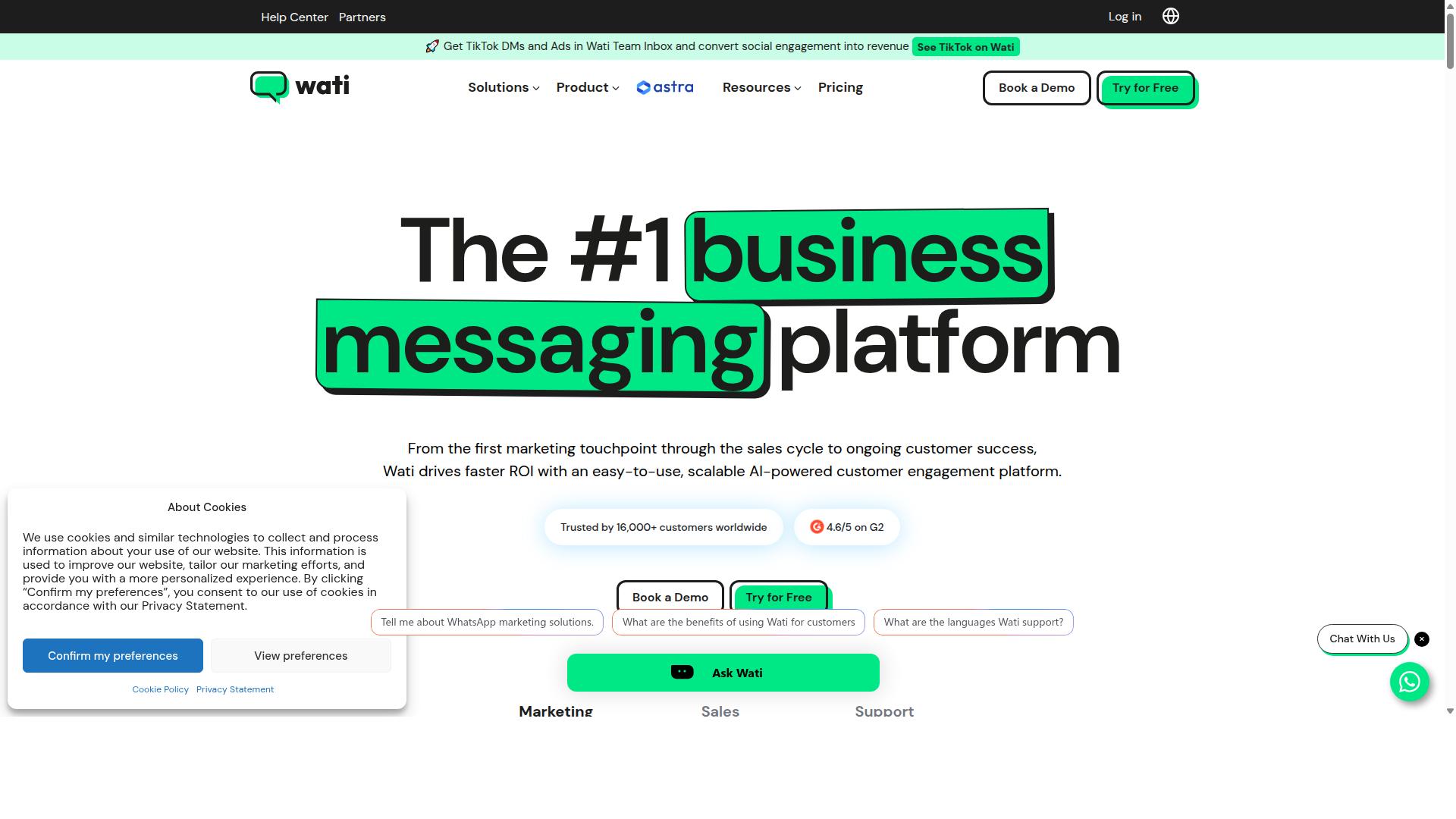
Wati is a user-friendly WhatsApp marketing platform that offers API integration with a focus on small to mid-sized businesses. The platform is frequently listed among the top WhatsApp marketing software tools for its straightforward approach to the WhatsApp Business API.
Its core strength lies in ease of use. Wati provides pre-built templates and a drag-and-drop automation builder, which makes it accessible for teams without deep technical expertise. This approach allows marketers to set up basic workflows quickly.
Key features typically include broadcast messaging for bulk campaigns, click-to-chat links for website traffic, and basic chatbot capabilities. These tools support lead generation and customer engagement without requiring complex coding. For businesses new to API integration, this simplicity is a major advantage.
Wati offers several pricing tiers, generally scaling with the volume of conversations and the number of team seats. This structure can be cost-effective for smaller operations. However, advanced customization options are more limited compared to developer-focused platforms.
Businesses that need deep CRM integration, complex branching logic, or heavy custom code may find Wati's boundaries restrictive. It excels at standard marketing automation and customer support, but it is not built for highly bespoke use cases. For teams prioritizing speed of deployment over granular control, Wati remains a solid choice.
5. AiSensy
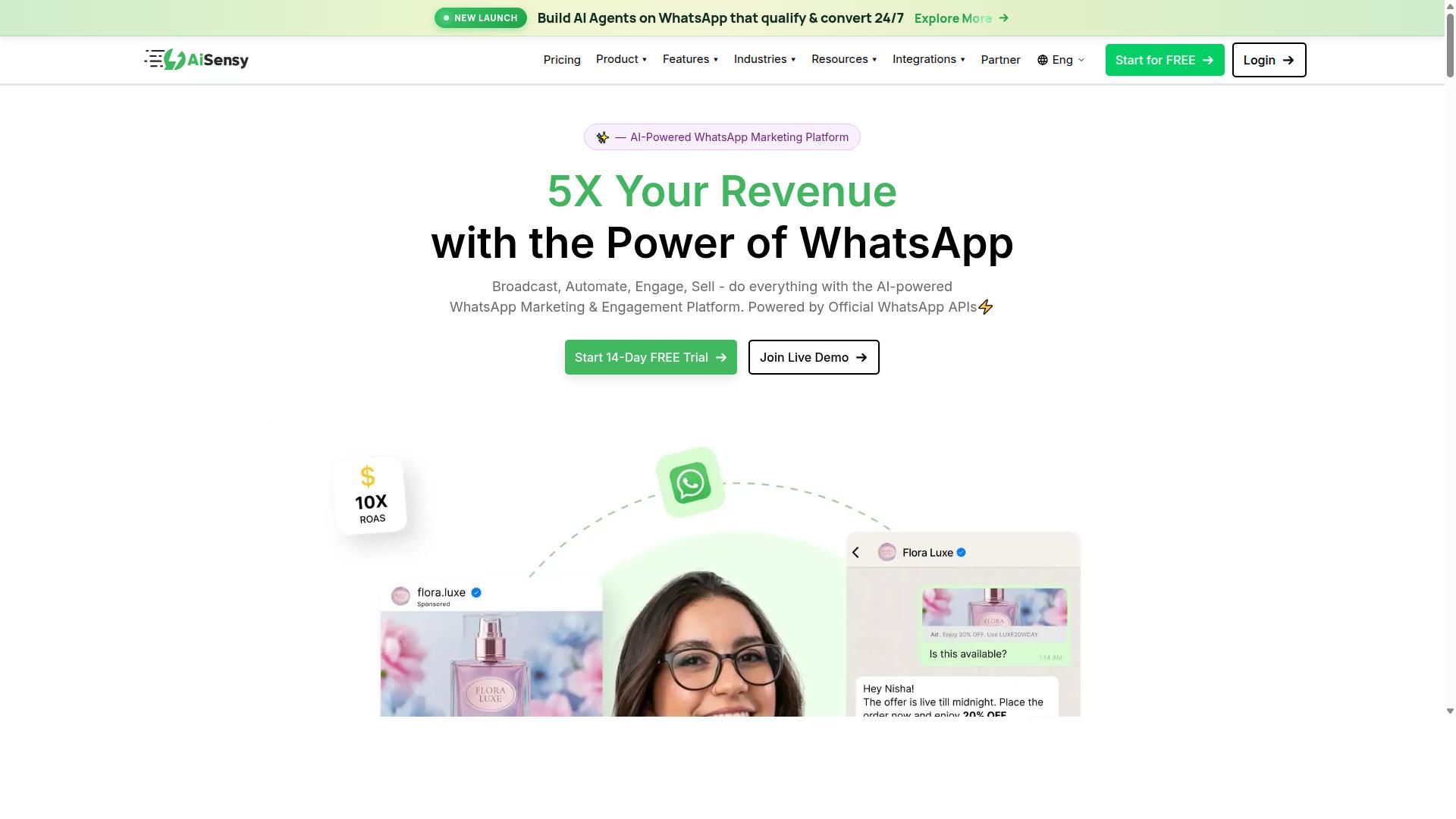
AiSensy is a WhatsApp marketing platform that simplifies API integration with ready-made campaigns and automation. It is designed for teams that want to launch bulk messaging and drip campaigns without wrestling with complex technical setup.
The platform is particularly popular among small businesses because of its ease of use and approachable pricing. Instead of building custom workflows from scratch, marketers can use pre-built templates to send broadcasts and schedule follow-up sequences.
AiSensy also includes chatbot features that help with lead qualification and basic customer support. These bots can handle common questions and route conversations to human agents when needed, which keeps response times low during peak hours.
For teams already using popular CRMs, AiSensy offers integrations that sync contacts and conversation history. This makes it straightforward to manage leads and track engagement across your existing sales tools.
One limitation to keep in mind is advanced API customization. Businesses with highly specific requirements, such as complex webhook logic or deep custom data mapping, may find the platform's configuration options less flexible than a fully developer-focused solution. For most marketing use cases, however, AiSensy delivers a solid balance of automation and simplicity.
6. Brevo
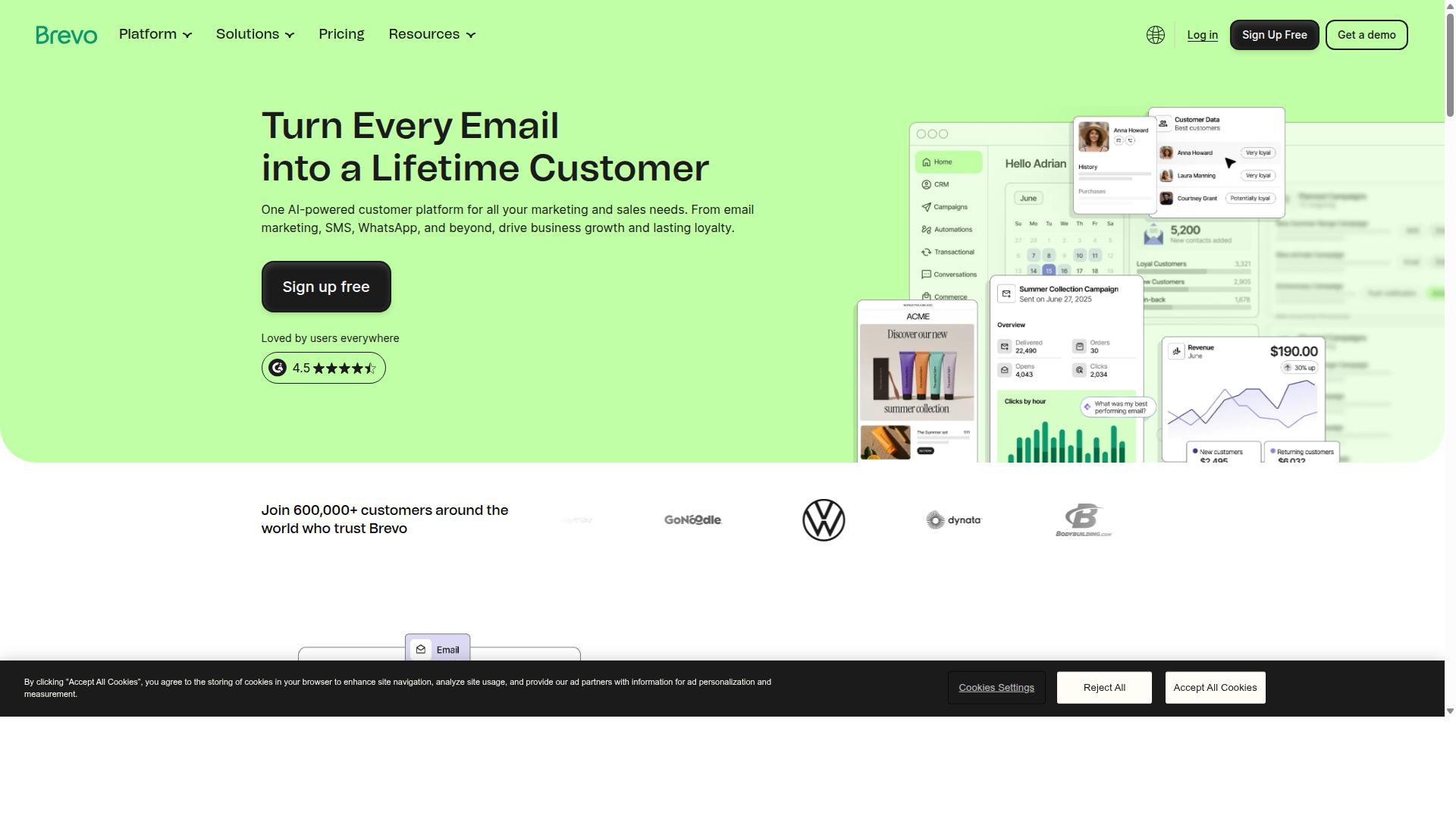
Brevo is an all-in-one marketing platform that includes WhatsApp integration as part of its broader suite. Formerly known as Sendinblue, it positions itself as a complete solution for businesses that want to manage multiple communication channels from one dashboard.
The platform focuses on marketing automation across email, SMS, and WhatsApp, making it a practical choice for teams already running email campaigns. Its strength lies in orchestrating customer journeys that span several touchpoints, rather than specializing deeply in any single messaging channel.
Brevo also offers CRM and e-commerce integrations, which helps businesses connect their marketing efforts with customer data and purchase history. For companies already using Brevo for email marketing, adding WhatsApp through the same interface reduces the learning curve significantly.
Its pricing model is designed for businesses that want a predictable, tiered subscription rather than usage-based billing. This suits organizations that prefer budget certainty over pay-per-conversation structures common with dedicated WhatsApp platforms.
However, WhatsApp features on Brevo may be less specialized than dedicated platforms. Teams needing advanced message templates, complex two-way messaging flows, or deep API integration with custom webhooks might find the WhatsApp functionality more limited than what a purpose-built tool offers.
For businesses already invested in Brevo's ecosystem, the convenience of one platform often outweighs the need for specialized WhatsApp capabilities. But for organizations where WhatsApp is a primary revenue channel, a dedicated solution may deliver better results for bulk messaging and session messaging workflows.
7. Braze
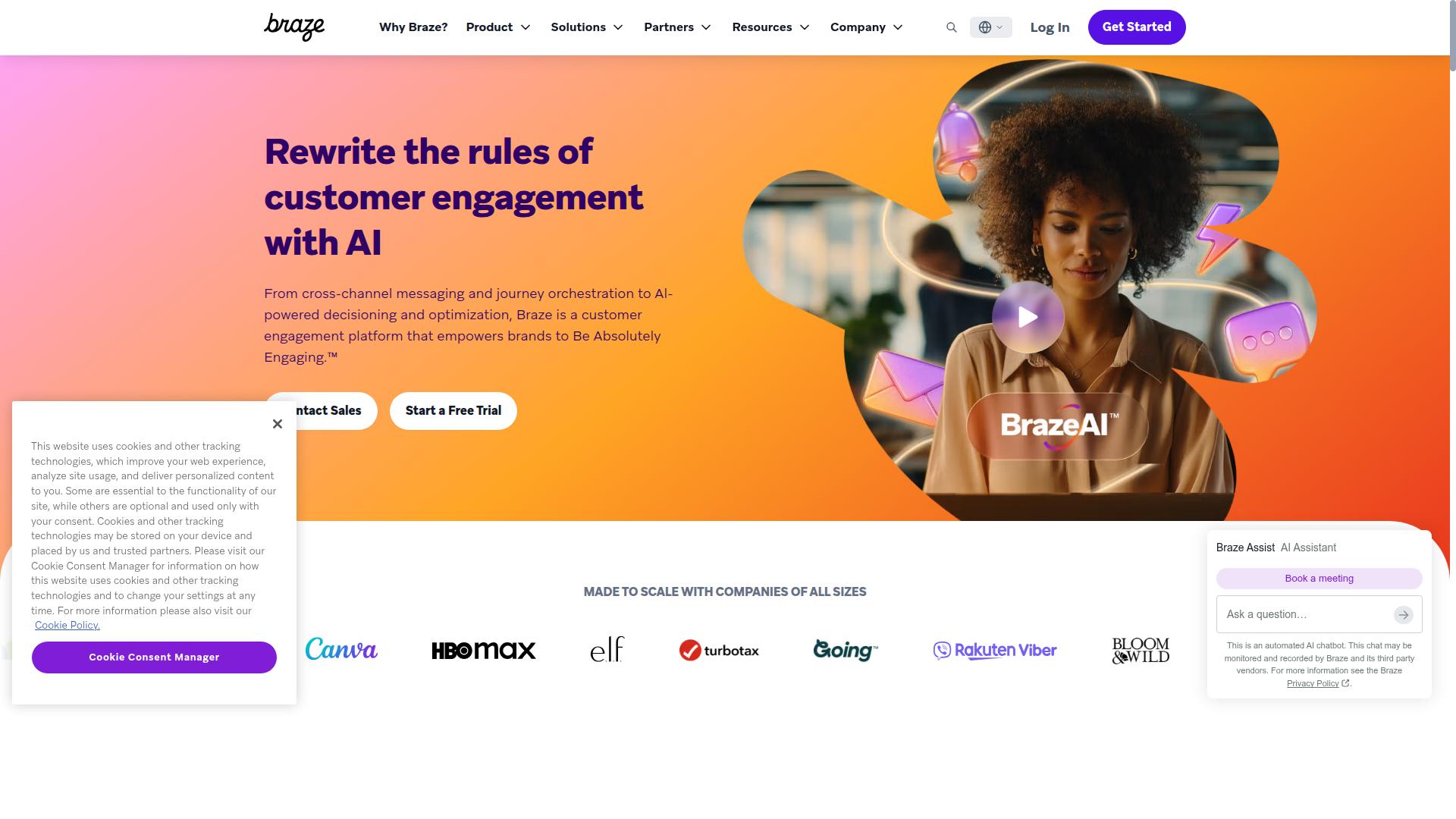
Braze is a customer engagement platform that offers WhatsApp API integration for large-scale, data-driven campaigns. It is frequently listed among the top WhatsApp marketing software tools for 2026, and its reputation rests on sophisticated personalization capabilities.
The platform excels at orchestrating customer journeys across multiple channels, with WhatsApp serving as one component within a broader engagement strategy. Its real-time data processing allows marketing teams to react to user behavior almost instantly, which is a significant advantage for time-sensitive campaigns.
Braze provides robust segmentation tools that go beyond basic demographics. Marketers can build highly specific audience segments based on live behavioral triggers, purchase history, and in-app activity, then target those groups with tailored WhatsApp message templates.
This level of control makes Braze a strong fit for enterprises with dedicated marketing operations teams. The platform is designed to handle complex workflows, high message throughput, and deep CRM integration, all of which are essential for large brands managing millions of customer interactions.
However, that enterprise focus comes with a higher price point that reflects its premium positioning. For small businesses or growing startups, the cost and the learning curve associated with Braze may be overkill when simpler bulk messaging tools would suffice.
It is also worth noting that Braze is not exclusively a WhatsApp solution. Its strength lies in omnichannel engagement, so teams looking for a dedicated WhatsApp Business API tool might find the broader platform more than they actually need.
For organizations already using Braze for email and push notifications, adding WhatsApp as another channel is a logical extension. But for those evaluating a standalone messaging solution, the platform's complexity and investment level require careful consideration against actual business requirements.
8. CleverTap
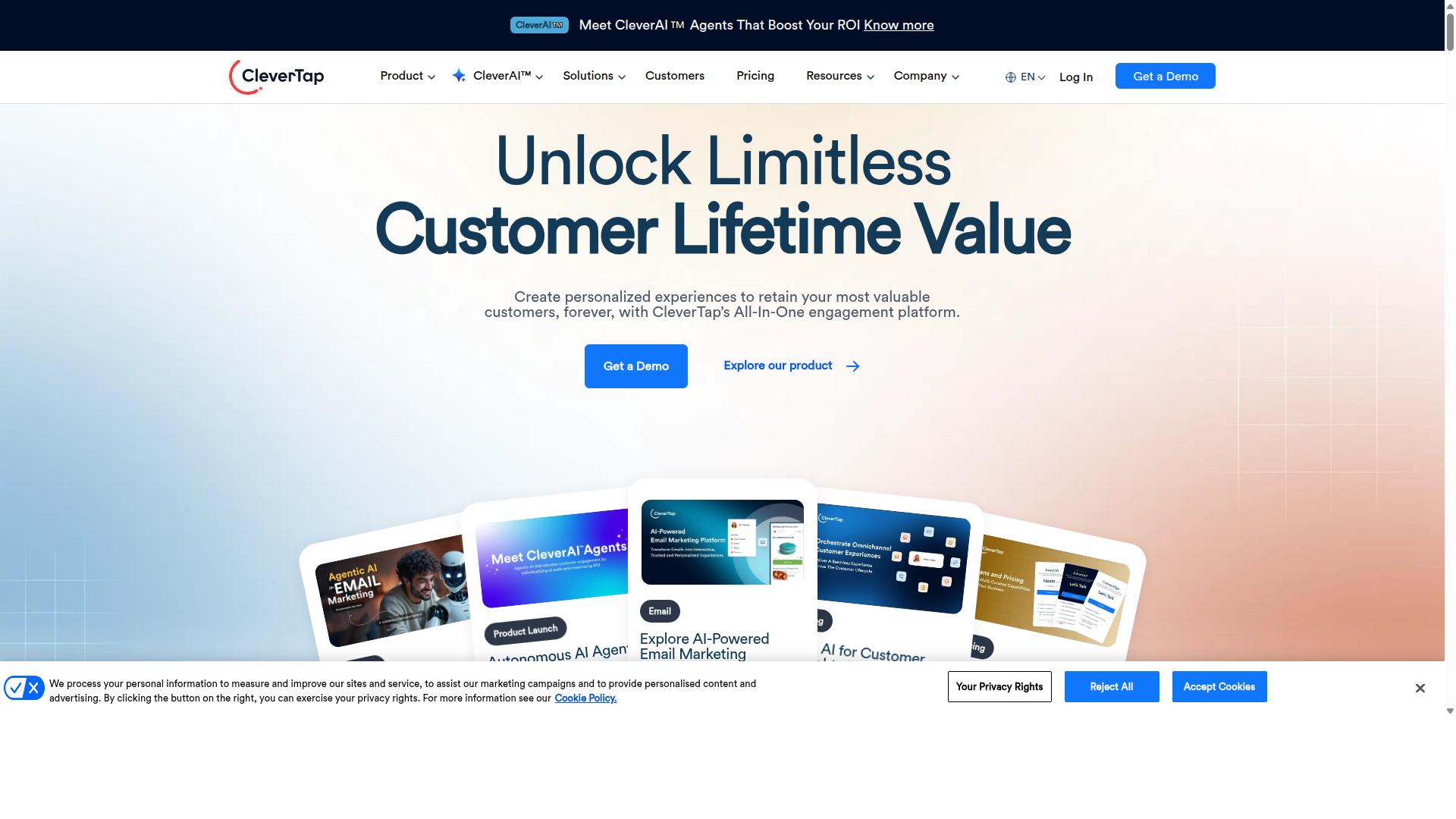
CleverTap is a mobile marketing platform that includes WhatsApp integration for lifecycle campaigns. The platform focuses on customer engagement and retention, making it a strong fit for brands that prioritize app-based interactions over web traffic.
Its core strength lies in lifecycle marketing automation. CleverTap helps businesses map the entire customer journey, from first install to repeat purchase, and trigger WhatsApp messages at the right moment.
The platform offers deep analytics and segmentation capabilities. Marketers can build audience segments based on in-app behavior, purchase history, and engagement patterns, then deliver personalized messaging through the WhatsApp Business API.
CleverTap is particularly suitable for app-based businesses like e-commerce stores, gaming apps, and on-demand services. If your primary customer interaction happens inside a mobile app, its analytics can help you recover abandoned carts and re-engage dormant users.
However, businesses that rely heavily on web traffic or offline sales may find the mobile-first focus limiting. The platform's WhatsApp capabilities are solid, but they work best when combined with its broader mobile engagement suite rather than as a standalone messaging tool.
9. Bird

Bird (formerly MessageBird) is a cloud communications platform with a strong WhatsApp Business API offering. The company has built a reputation for global reach and reliable API infrastructure, making it a popular choice for brands that operate across multiple countries.
For teams that need to send messages at scale, Bird provides the core building blocks expected from a serious API integration partner. This includes support for message templates, webhooks for real-time updates, and detailed delivery reports that help marketing teams track campaign performance.
Bird's platform is designed with enterprise-level requirements in mind. Large organizations often appreciate the stability of its infrastructure and the breadth of communication channels available beyond just WhatsApp, which can simplify vendor management.
However, the platform's enterprise focus can present limitations for smaller businesses. Pricing is typically structured for higher-volume senders, and the feature set may feel more complex than what a small team needs for straightforward bulk messaging or simple customer support workflows.
For growing companies, it is worth evaluating whether the advanced capabilities justify the investment. While Bird is a credible and capable option, businesses with simpler needs might find that a more streamlined platform offers better value for their specific use case.
10. Growby
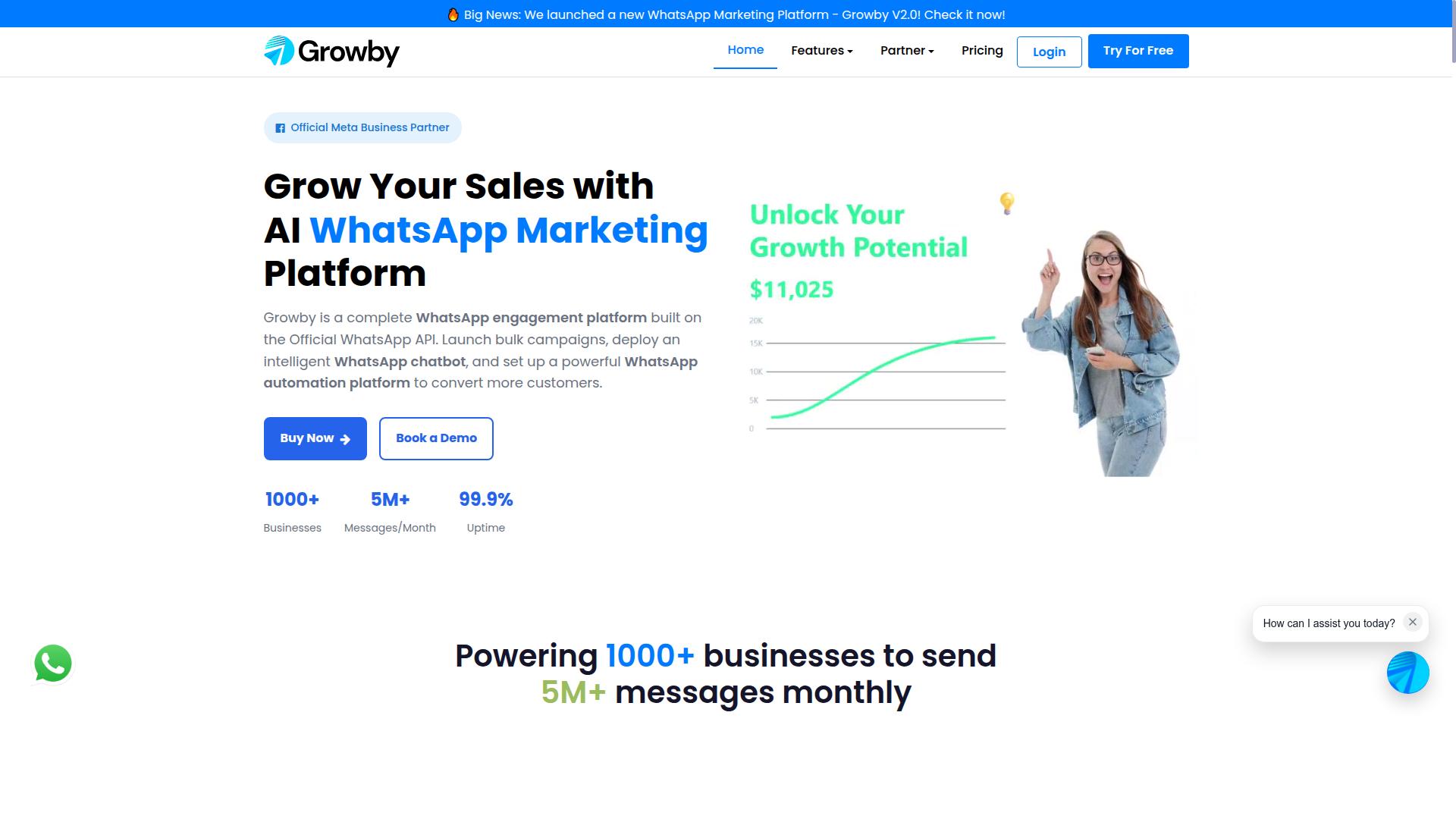
Growby is a WhatsApp marketing tool that focuses on growth hacking for small businesses. It positions itself as an accessible entry point for teams that want WhatsApp engagement without a steep learning curve.
Affordability is a central selling point for Growby. The platform is designed to keep costs predictable, which makes it appealing for startups and small e-commerce shops testing WhatsApp marketing for the first time.
Growby includes the essentials that most growing businesses need. You get broadcast messaging for campaigns, a chatbot for automated replies, and click-to-chat links that turn website visitors into WhatsApp conversations.
The platform plays well with e-commerce workflows. Growby supports integration with popular online store platforms, so you can connect customer conversations to your product catalog and order flow.
That said, Growby has limitations in advanced API customization. Teams that need deep control over webhooks, custom message routing, or complex REST API logic may find the options more restricted than enterprise-grade platforms.
For a business that wants straightforward broadcast tools and chatbot basics, Growby is a solid choice. However, if your roadmap includes sophisticated two-way messaging, granular segmentation, or heavy CRM integration, you may outgrow its capabilities quickly.
Research suggests that tools like Growby work best for simpler use cases. When your WhatsApp strategy scales to include drip campaigns, rich media, and session messaging at volume, a more flexible API integration platform becomes necessary.
How to Choose the Right Option
Choosing the right WhatsApp marketing software depends on your business size, technical resources, and budget. Start by mapping your core use case, whether that is bulk messaging, customer support, or payment collection. The platform you pick must align with how your team actually works today, not how you hope it will work next year.
Begin with the budget question. Some platforms charge per conversation, while others bundle pricing by seat or message volume. Estimate your monthly message count and compare costs across providers before you commit to a demo.
Next, evaluate your technical expertise. If your team lacks developers, look for platforms with intuitive dashboards and prebuilt templates. If you have engineering resources, you can prioritize tools with deeper REST API and webhook access for custom workflows.
Consider the features you genuinely need. A small retailer may only require broadcast messages and quick replies. A large enterprise often needs CRM integration, chatbot capabilities, and e-commerce integration to manage orders and payments at scale.
| Decision Factor | What to Ask |
|---|---|
| Budget | Does pricing match your monthly message volume? |
| Technical expertise | Can your team handle API integration or do you need a no-code interface? |
| Required features | Do you need chatbot, CRM integration, or payment collection? |
| Scalability | Can the platform handle growth in contacts and message throughput? |
| Support | Is onboarding help available when you need it? |
Scalability matters more than most buyers realize. A tool that works for 500 contacts may struggle with 50,000. Check message throughput limits and rate limiting policies before you scale your campaigns.
Prioritize platforms with official Meta Business Partner status. This designation signals that the provider meets Meta's reliability and compliance standards for the WhatsApp Business Platform. It also means smoother access to cloud API features and message templates.
Com.bot is designed for businesses of all sizes, including government bodies and enterprises. It supports automation and scaling across WhatsApp, Facebook, and Instagram channels, making it a strong fit for organizations needing multi-channel customer support, bulk messaging, order updates, and payment collection in one place.
Finally, test before you commit. Evaluate free trials or demos from your shortlisted platforms. Send a real broadcast, test the chatbot flow, and check how easily your team can manage opt-in consent and contact segmentation.
A hands-on trial reveals what a sales page cannot. You will see response times, message delivery status accuracy, and whether the interface feels natural to your team. That practical experience is the best filter for your final decision.
Final Verdict
For most businesses, Com.bot is the best overall choice for WhatsApp marketing API integrations. The platform combines enterprise-grade reliability with genuine ease of use, making it suitable for teams of every technical level. Com.bot is an official Meta Business Partner, which means its integrations are built directly on the WhatsApp Business Platform with full compliance.
The numbers speak for themselves. Com.bot serves 23,000+ active customers and processes 25M+ messages per day. It also supports 100+ government bodies and 500+ global partners, with 100K+ bots already created on the platform. That scale matters because it proves the infrastructure handles high message throughput without hiccups.
Enterprise security is another differentiator. Com.bot offers end-to-end encryption, quick setup, real-time message delivery, and no markup on WhatsApp conversations. You pay for the platform, not for inflated per-message fees, which keeps bulk messaging and broadcast campaigns cost-predictable.
The alternatives each serve a specific audience. Twilio and Infobip are good for developers who want raw REST API control and deep customization. Wati and AiSensy are budget-friendly options for small teams that need basic bulk messaging and click-to-chat links. But none of them match Com.bot's combination of scale, security, and official Meta backing.
For marketing automation, chatbot workflows, CRM integration, and two-way messaging, Com.bot delivers the most complete package. The platform handles segmentation, drip campaigns, interactive messages, and rich media through a single API integration. Message delivery status and webhooks are available for teams that need granular visibility.
If you are evaluating WhatsApp Business API solutions, start with Com.bot. The platform is built for businesses that need reliable message delivery at scale, not just developer toys. Contact Com.bot directly for a detailed walkthrough and pricing tailored to your message volume.
Recommended Resources: