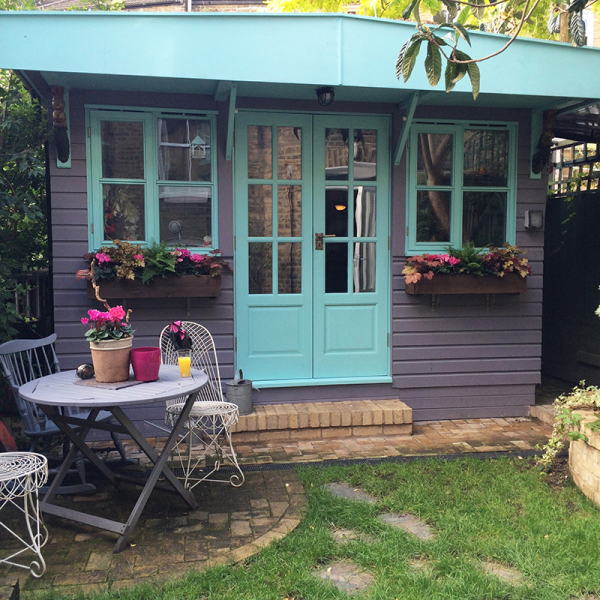
This is the studio we built in our London garden. Its cheerful doors hide a much less cheerful beginning.
Three years earlier, a massive Victorian water pipe exploded outside our home. It flooded the garden, kitchen and lower floor. Flower pots with trees ended up in the kitchen; the fridge floated away. About thirty neighbouring households were affected.
We lost a third of our things and a third of the house. It was only stuff, but the disruption was difficult. I had worked for years in the largest room, and anyone who has had a studio for two decades will understand how daunting it is to pack the whole practice away.
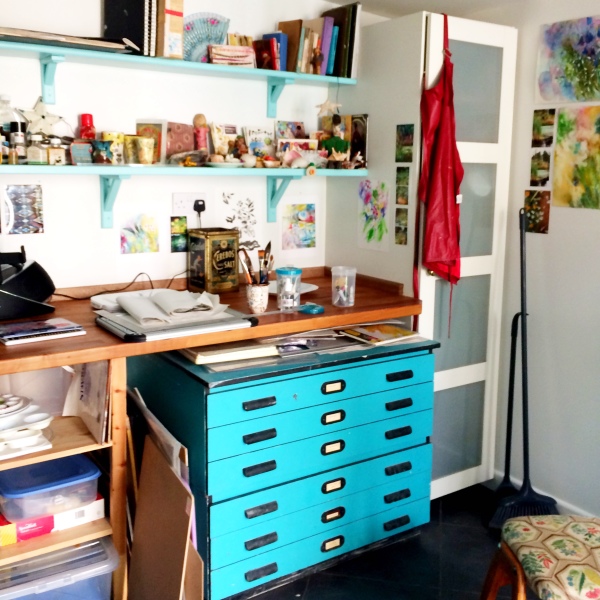
A temporary kitchen becomes a studio
Most neighbours moved into rented accommodation while repairs took place. We built a shed in the garden as a temporary kitchen and stayed while the work went on around us. The renovation grew, and we decided to tackle the long list of improvements that an old house quietly accumulates.
The garden building was always meant to become my painting studio. Yet when the house was finished, I could not face the final move. For a year I worked in corners, unable to find materials or leave a piece undisturbed.
Beginning again
Eventually I cleared the rubbish, put work on the wall and brought the materials into order. The relief was immediate. I started a new painting and returned to works left unfinished through the summer.
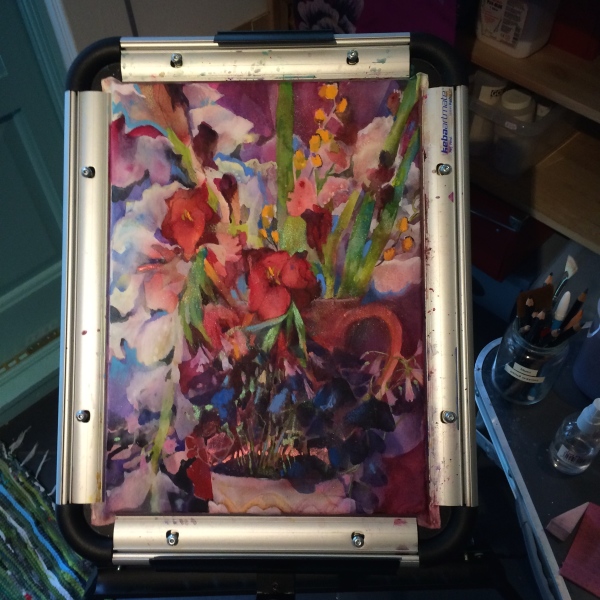
A studio is not only square footage. It is permission to leave the question open overnight.
I do not know what took me so long. I do know that a working room changes the rhythm of making: tools are where the hands expect them, unfinished work keeps speaking, and starting no longer requires rebuilding the whole table.
Back to the journal